



Who we are
Our Heritage
IQM traces its roots to decades of pioneering work in radio-frequency ion propulsion, inspired by the research and insights of Prof. Horst Löb, a key figure in European electric propulsion. His vision and guidance have played an essential role in shaping IQM’s approach to advanced plasma and propulsion technologies.
Building on that heritage, IQM has evolved into an independent project division within TransMIT GmbH, dedicated to advancing cutting-edge propulsion and plasma technologies.
Our History
IQM’s origins lie in the strong research tradition of Gießen, where expertise in radio-frequency ion propulsion and ion-source technologies was established under the guidance of Prof. Horst Löb. From the outset, this work relied on close interaction between academic research and industrial application. In line with the established mission of TransMIT GmbH as a technology-transfer organisation supporting Hessian universities, applied research projects were carried out through TransMIT to enable contract research and industrial cooperation.
Within this framework, and while actively engaged in university-based research, Dr Davar Feili led numerous applied R&D activities from the early 2000s onward. In 2009, some of these activities were formally consolidated within TransMIT through the establishment of the Project Division for Ion and Plasma Propulsion (IQM), providing a dedicated organisational structure for continued research, development, and technology transfer. Since its establishment, IQM has served as a vital bridge between academia and industry, supporting numerous graduate and doctoral researchers in the field of electric propulsion.
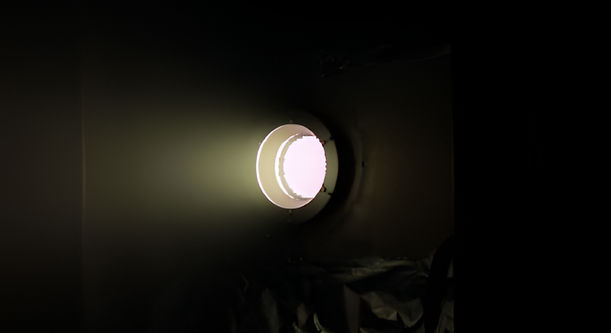
Under the technical leadership of Dr Davar Feili, IQM became a recognised competence project division supporting numerous ESA and industrial contracts, while maintaining close cooperation with university laboratories. Prof. Löb continued to support IQM as a senior advisor until his passing in 2016, ensuring that his scientific legacy remained central to the project division’s philosophy. A landmark achievement during this period was the first European experimental campaign on air-breathing electric propulsion (ABEP) in 2010, where IQM demonstrated the stable operation of an RIT-10 thruster using atmospheric gases. This pioneering work provided the first lifetime and erosion data for VLEO operations, laying the foundation for future European ABEP programmes.
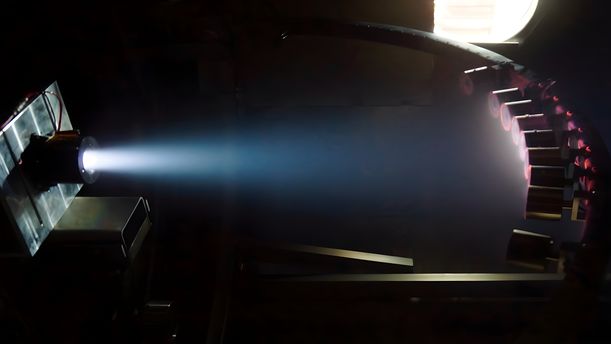
Since the mid-2010s, Dipl.-Ing. Maria Smirnova has led IQM, guiding the project division through an active phase of ESA collaborations and technology development. Under her direction, IQM contributed to major ESA activities, including the development of RIT-3.5 for NGGM (handed over by Dr Feili) and the VISP project, introducing innovative multi-grid optics that enabled variable specific impulse operation. During the same period, the team also conceived and tested the Impulse Transfer Thruster (ITT) — the first gridded ion thruster with a centrally mounted cathode, designed for beam-shepherd and debris-removal missions, and demonstrated exceptional performance that remains unmatched worldwide. Its double-sided configuration was also successfully tested.
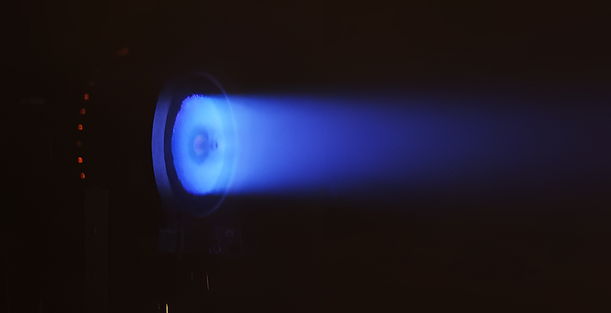
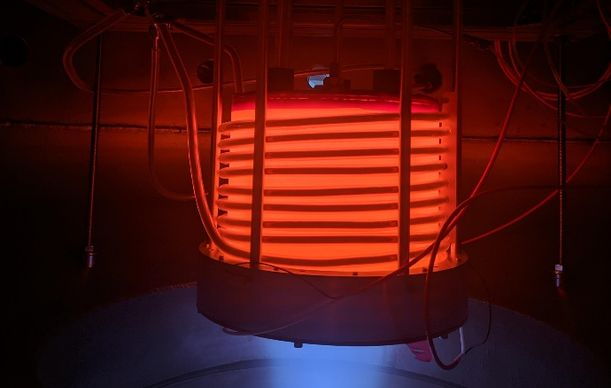
Today, IQM continues to unite its scientific heritage with forward-looking innovation, pursuing challenging projects that expand the frontiers of electric propulsion, including air-breathing propulsion, cathodeless plasma sources, and advanced ion-beam systems.
Our Team
IQM is an international team of experts, educated by top-class specialists across Europe. Each of our staff members brings at least fifteen years of hands-on experience in plasma physics and engineering, electric propulsion, power sources for space applications and plasma technology for industrial applications.
This unique blend of scientific depth and engineering know-how allows us to bridge the gap between research, development, and practical implementation. IQM is currently led by Maria Smirnova, who combines extensive project experience in European propulsion programs with strong expertise in plasma source development and system integration. Our vast network of consultants and collaborators enables us to scale and adapt to projects of any complexity.
Our Vision
IQM combines a strong heritage in RF ion propulsion with a forward-looking approach to next-generation space and plasma technologies, picking the most challenging goals. Our work spans from advancing high-TRL propulsion systems for space missions to adapting ion-source technology for industrial applications, ensuring our expertise remains at the cutting edge of research and engineering.
IQM consistently undertakes projects at the edge of scientific possibilities, tackling highly challenging goals and developing practical solutions where others might see limits.
IQM’s heritage combines decades of European and international expertise. Our team brings together specialists trained by leading EP figures, ensuring both technical excellence and continuity of the European RIT legacy.